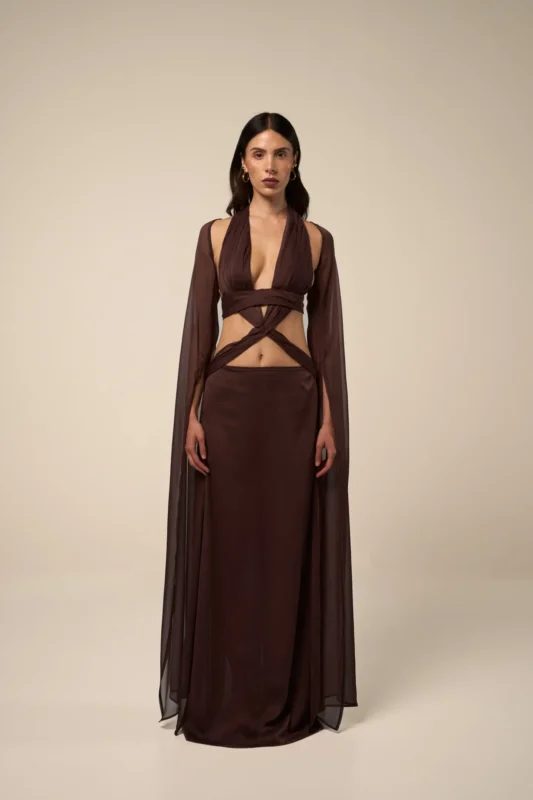
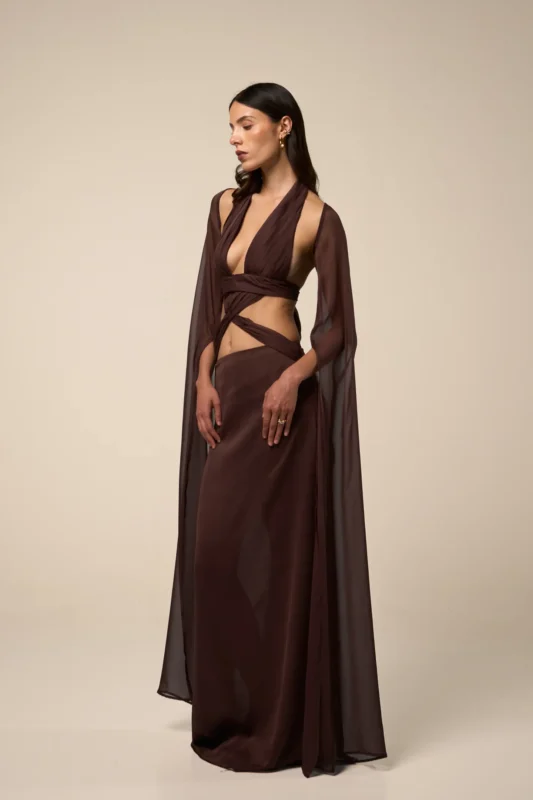
WHAT INSPIRED ME
So, without getting too sentimental, I’ll say this: my biggest inspiration has always been women. Every time I design, I ask myself: who am I designing for today? What city is she in? Where does she go? What restaurant is she dining in today? Is she on a date? At a birthday party? A birthday party where her ex will be? Is she meeting the parents? Her new partner's friends? Is she feeling flirty? Edgy? Cute? Feminine? Is she all of those things? Who is she chasing to embody today?
Is she wearing this piece at Langosteria Milano or La Guérite in Cannes? Could she wear it in both?
Once I know who she is, I begin building her world—thinking through proportions, cuts, textures. What does she want to show? What doesn’t she? Long or short? Sleeved or strapless? From there, I merge her mood with something visual—an art movement, a natural reference, a texture, a color.
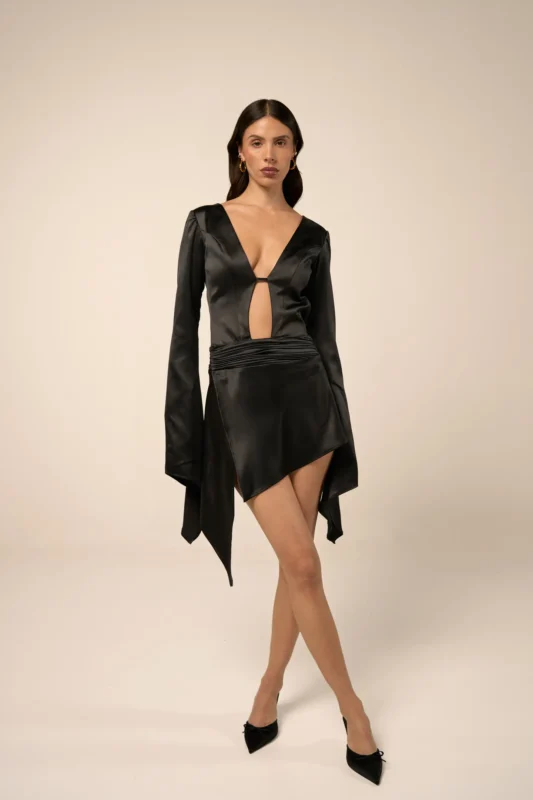
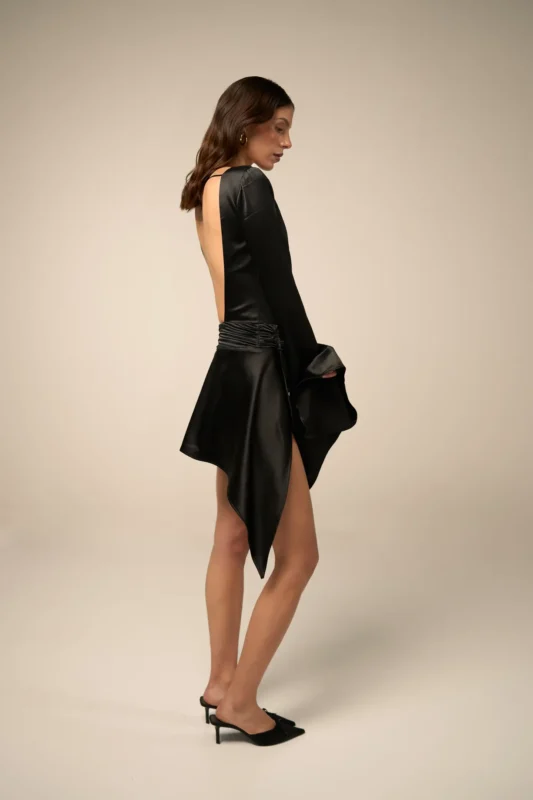
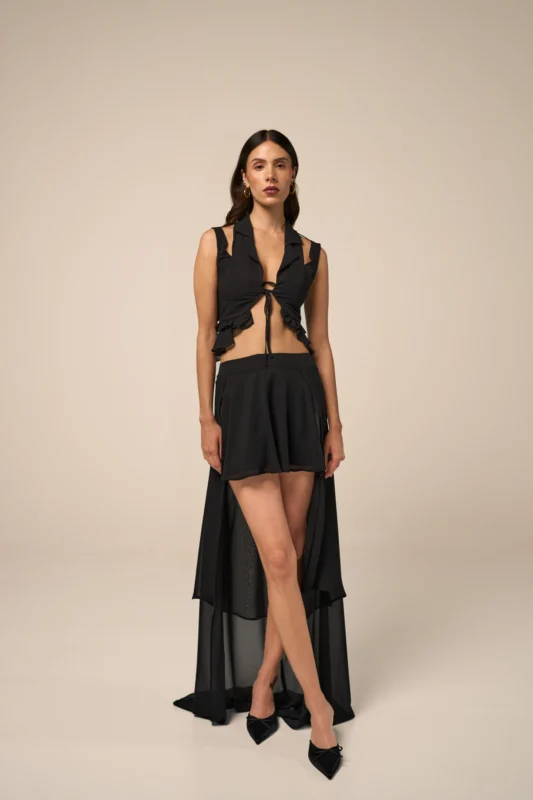
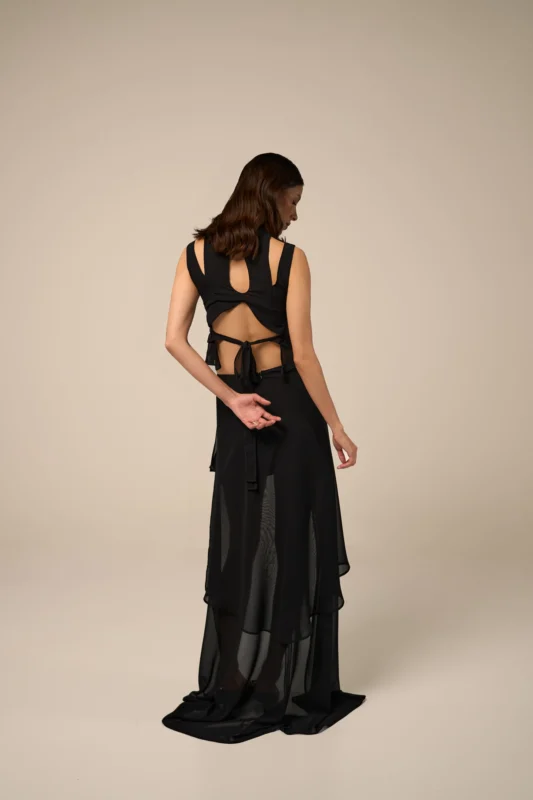
APOSEA, like so many good things, began without a plan. When I first came to Mexico City, I wasn’t planning on staying. After years of moving around and not being able to properly launch my brand, I found myself designing pieces just for me—for events, for trips, for whatever was coming next. And, maybe a little naively, I became the woman I was designing for. I imagined what I’d want to wear to feel chic, effortless, elegant— not loud, but quietly magnetic. Pieces that didn’t ask for attention, but attracted it anyway.
The more life became stable, more settled, the more designs I had. I had a logo. I had a name. And slowly, things started to fall into place. The name OCELLÉE is rooted in the word ocellus—the eye-like markings found on certain animals like butterflies, peacocks, and reptiles. The name then translated it into the cuts, colors, and patterns of the pieces in this collection. There was no master plan—but somehow, it all aligned.
FIRST TIME SHOOTING, EMOTIONS BEHIND THE LENS
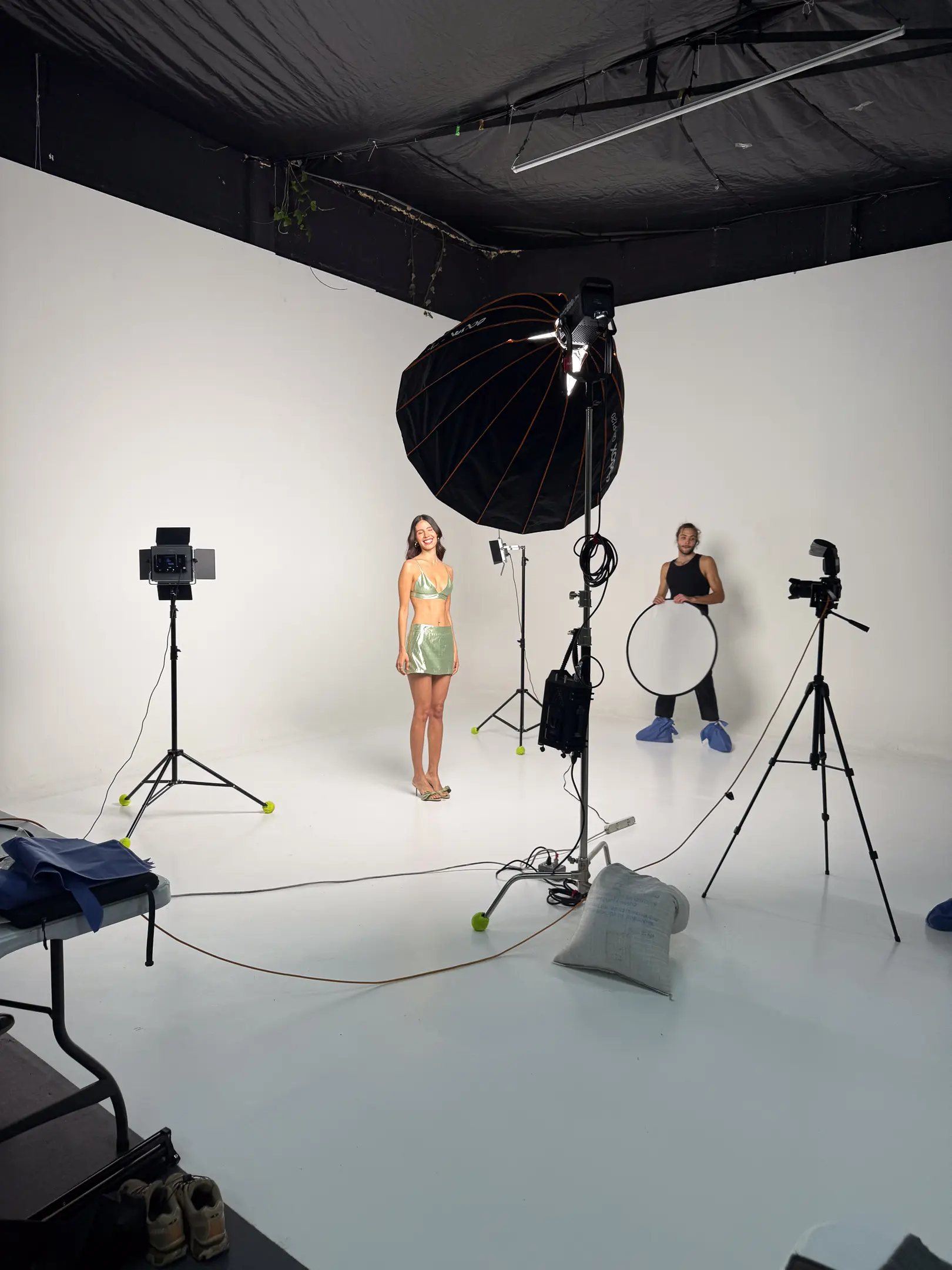
A day I always saw as an eternity away was finally here. It felt surreal, it felt weird, I felt awkward. I had no idea how to act, how was I, a 25 y/o with no real experience supposed to direct a team of professionals? Give orders? Make calls? How was I going to give directions and say my piece when this was literally my first time ever even being close to directing a set? I was nauseous and tired as the weeks before this shoot had been packed with sleepless nights of work and stress, nights staring at the ceiling wondering if what I was doing made sense, spending all my money into what up until this point had
only been a dream, an illusion.
It felt like I had all eyes on me. Everyone around me with their expectations, theirjudgments, their opinions. “What if I do horribly? What if I don’t sell a single piece? What if this is a disaster? What if I ran out of fabric or my atelier fell through, or the website crashed. Taxes? I don’t know how to pay taxes? What will my parents say if this all goes to sh*t? Have they supported my extravaganzas and my delusions for nothing? Will my brother be the one saying “I told you so”, or will it be me—after everything—finally saying it to him? After all the arguments, the loving-but-exasperated lectures, the times he told me I should’ve just gone corporate, gotten a normal job, lived a normal life like a normal person. Am I gambling too much? I’m 25—not 20. I know I’m also not 90, but sometimes it feels like the pressure to have your life figured out at 25 is heavier than it is at 45. Am I being smart? Strategic? Or am I just blindly chasing something because I’m too stubborn to walk away? Honestly—what the hell am I doing?
there—on set—wearing those blue fabric shoe covers meant to protect the studio’s cove. I’m staring at the lights, the photography team, half-listening to the makeup artists asking questions that sound muffled, as if I were underwater, barely able to process what they’re saying. I’m thinking about how the clothes need ironing and how these seemingly silly (but not silly at all) decisions need to be made—what model wears what, which earrings go better with which dress, what shoes pair best—and it’s all chaos. And I’m just standing there, still, slightly in shock, thinking: how in the world did I actually end up here? This was supposed to be a fantasy. This was never supposed to happen. How did this become real? And then—suddenly—the panicked bubble I was in just imploded.
Adrenaline took over. I started moving. I figured it out. And I ended up having the best day of my life. Literally. Because when you’re doing something you love—something you know so deeply, instinctively—there is no right or wrong. It just is. It becomes what it needs to become, and it ends up perfect in its own way. Seeing my project come to life, worn by actual models, shot by a real photographer, watching the images appear on the big studio screen—it made every sleepless night worth it. Every tear, every fear, every anxious thought—it all became worth it.
HOW TO HANDLE PERFECTIONISM
There’s no universal advice here. But after many conversations with other founders, I’ve come to believe that while perfectionism can be heavy—it can also be a gift. Especially in an industry where details matter.
At some point, you may have a team you can delegate to. But even then, your vision is your own. No one else can see it the way you do. And while perfectionism may drive you a little insane, it also keeps your standards high.
Micromanaging? Sometimes a necessity. In this industry, stress is part of the job. It’s what keeps you moving. One model cancels? You pivot. A delivery’s delayed? You find four backup ateliers. Be ready. Stay sharp. Let stress be fuel. Let perfectionism keep you focused.
Because lazy work just means you’ll have to do it all again.
Be clear. Be precise. Give good direction. Because no one will guess what you want—and in most cases, people will do the minimum unless you demand more.
So be a perfectionist. Own it. No one will build it for you. This is your vision. Make it count.
CHECK OUT OUR FAVORITES